What Is a Non-GBP Transaction Fee? (UK Bank Statement Explained)
Quick answer: a non-GBP transaction fee (also called a non-sterling transaction fee) is a charge your UK bank adds when you pay in any currency other than pounds — on holiday or online with a business outside the UK. It is usually about 2.75%–2.99% of the payment, so £100 abroad costs around £2.75–£2.99 extra. Work out the fee on your own payment →
What the lines on your statement mean
| Statement text | What it means |
|---|---|
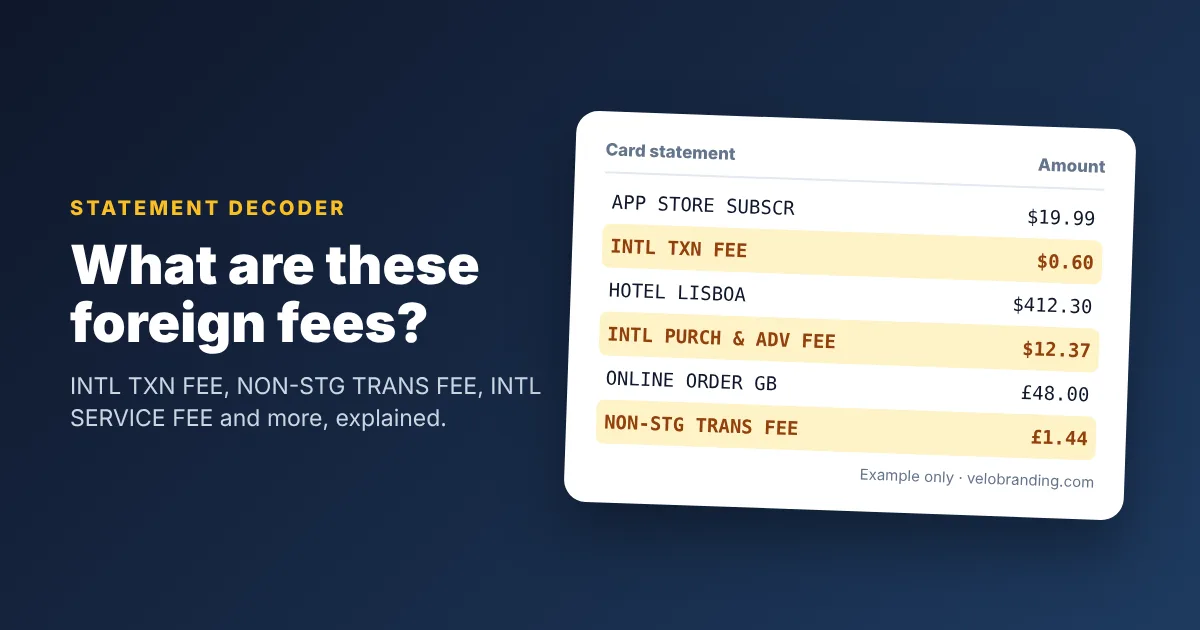
| NON-GBP PURCH FEE / NON-STG PURCH FEE | The non-sterling fee on a card purchase (PURCH = purchase). |
| NON-GBP TRANS FEE / NON-STG TRANS FEE | The non-sterling transaction fee — the same type of charge, different label. |
| NON-GBP CASH FEE | An extra fee for taking out cash abroad, often with a minimum amount. |
| INTERNATIONAL POS FEE / FX FEE | Other names banks and cards use for a foreign transaction fee at a shop till (POS = point of sale). |
The exact wording depends on your bank. The fee usually appears as its own small line next to the purchase, sometimes a day or two later.
How much UK banks charge
| Example | Card purchases in another currency | Cash withdrawals abroad |
|---|---|---|
| HSBC UK debit card | 2.75% | 2% (min £1.75, max £5) |
| HSBC UK credit card | 2.99% | 2.99% (min £3) |
| Santander debit card | 2.95% on the examples shown | 2.95% on the examples shown |
| Typical high-street rate | About 2.75%–2.99% | Percentage fee, often with a minimum |
HSBC figures from HSBC UK’s “using your card abroad” page; Santander from Wise’s UK guide (updated July 2026). Banks change their fees and some accounts or add-ons remove them — check your own bank’s current tariff.
Why you can be charged when you never left the UK
- The seller is outside the UK — many websites that look British take payment through a company registered in another country.
- The price is in another currency — for example USD or EUR on a software subscription or marketplace.
- Digital purchases — apps, games, hosting and online tools are often billed from abroad.
- Goods shipped from abroad — the item comes from outside the UK even if the listing is in pounds.
If you do not recognise the purchase at all, contact your bank — it can also be a sign that your card details were used by someone else.
Example: what a £100 payment really costs
| Fee rate | Fee on £100 | Total |
|---|---|---|
| 0% (fee-free card) | £0.00 | £100.00 |
| 2.75% | £2.75 | £102.75 |
| 2.99% | £2.99 | £102.99 |
On top of the fee, the exchange rate matters. Card networks use their own daily rate; if a shop or cash machine converts for you, the rate is often worse.
How to avoid non-GBP fees
- Use a fee-free card for foreign spending — some current accounts, travel credit cards and money apps charge no non-sterling fee.
- Always pay in the local currency abroad. If a card machine or ATM offers to charge you in pounds, say no — that is dynamic currency conversion, and its rate is usually worse.
- Check where an online seller is based before you pay, and compare the GBP price with the foreign price plus your card’s fee.
- Take fewer, larger cash withdrawals abroad if your card has a minimum cash fee.
- Avoid cash on a credit card — it can add a cash fee, interest from day one and the non-sterling fee.
Calculate the fee on your own payment
The free international transaction fee calculator shows the fee and the exchange-rate cost on any amount, so you can see what a foreign payment really costs before you pay. For the bigger picture across countries and card types, read International transaction fees explained.
Frequently asked questions
What is a non-GBP transaction fee?
A fee your UK bank charges when you pay in a currency other than pounds sterling, either abroad or online with a business outside the UK. It is usually a percentage of the payment, often about 2.75%–2.99%.
What does NON-GBP PURCH FEE mean on my statement?
It is the non-sterling fee on a card purchase (PURCH = purchase). NON-GBP TRANS FEE or NON-STG TRANS FEE are other labels for the same kind of charge. It shows as a separate small line next to the purchase.
Why was I charged a non-GBP fee when I bought from a UK website?
The payment was probably processed by a company or payment provider registered outside the UK, or charged in another currency, even if the website looked British. Digital purchases and marketplace sellers are common causes.
How can I avoid non-sterling transaction fees?
Use a card with no foreign transaction fees (some current accounts, travel credit cards and money apps offer this), always pay in the local currency rather than pounds abroad, and check the seller’s location before buying online.
Should I pay in pounds or the local currency abroad?
Usually the local currency. If you choose pounds, the shop or cash machine converts the price for you (dynamic currency conversion), often at a worse exchange rate — and your bank may still charge its fee.